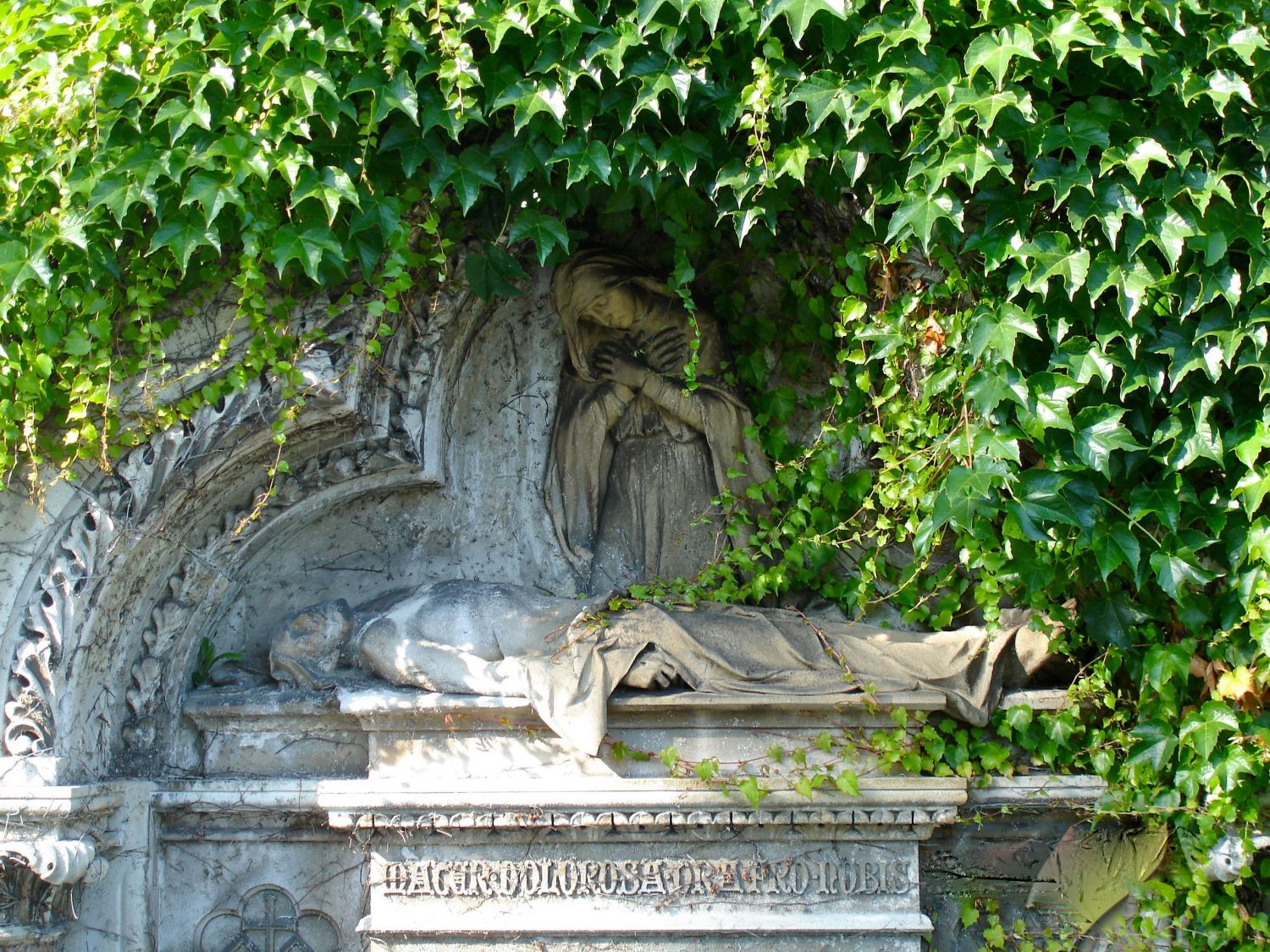

I’m pretty fascinated with the darker emotions– what psychologist Carl Jung called the “shadow.” Right now, I’m researching grief– our emotional response to loss. We all experience loss, and in American culture, which emphasizes positivity, optimism, and smiley faces, we often don’t give ourselves permission to mourn our losses. Late-nineteenth-century Europeans knew a thing or two about mourning. Their cults of death are notorious for their sentimentality, iron-bound social etiquette, and connection displays of status. But I am fascinated by cemeteries, and late-nineteenth century grave markers can be breathtaking.
The image above is the top of a grave marker in Grinzing, a northwestern suburb of Vienna. The text says “Mother of sorrow, pray for us.” It was a beautiful day, I was the only visitor on a Sunday, and so I spent several hours walking the site.
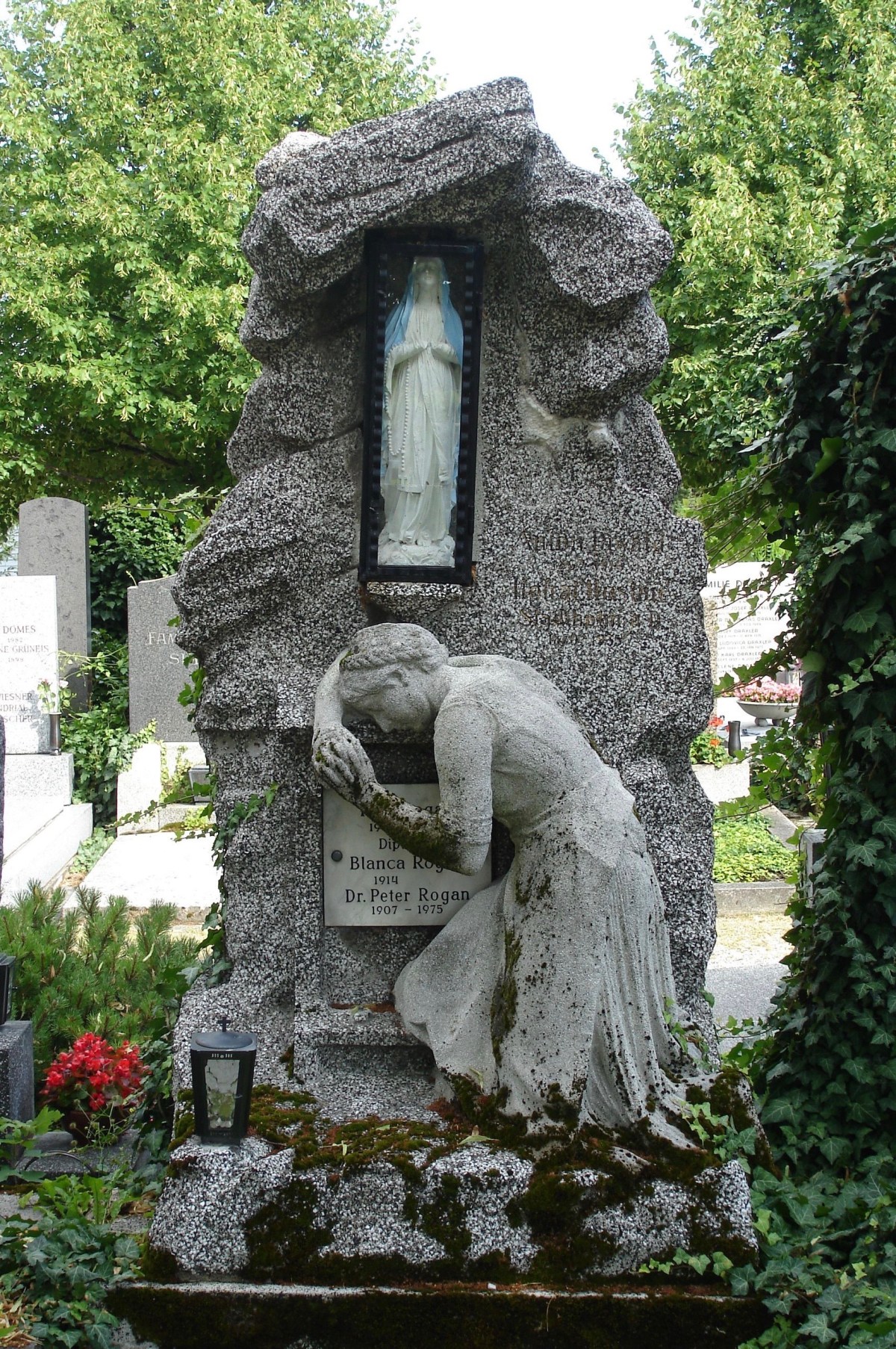
Sorrow and grief were symbolized most often by women, and the softened, bent posture was a very common pose. However, not all markers were so Christian or personal. The composer Gustav Mahler is commemorated with a high modern marker.
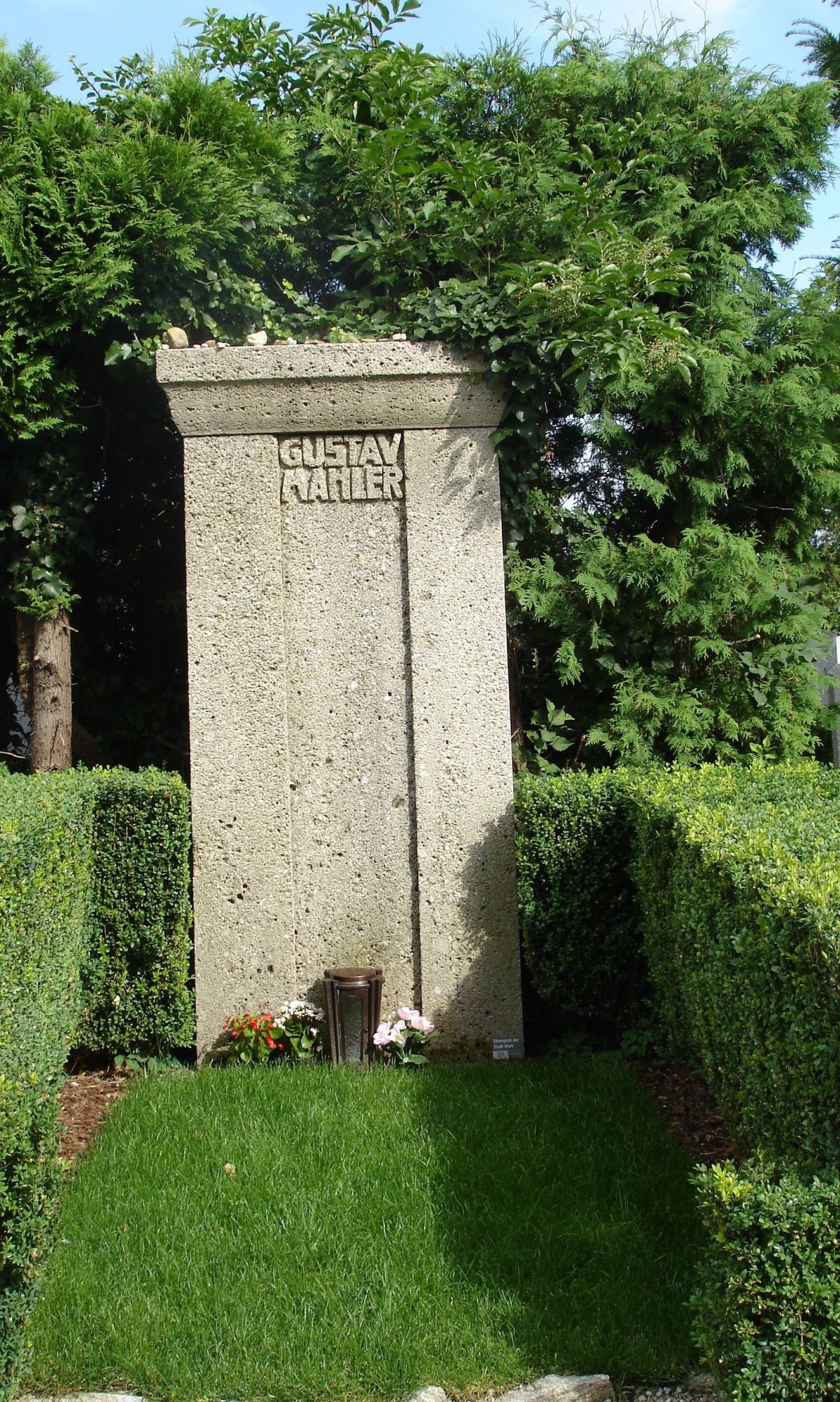
His greatness speaks for itself, apparently. He’s one of my favorite composers– check out his last symphony (#10) Mahler no. 10 adagio if you’re interested in one of the last Romantic composers who stretched forms to the breaking point.
This was the era of lockets with circles of the loved deceased one’s hair, death photographs, black mourning clothes, and social seclusion. While these often were quiet oppressive for women to adhere to, they did give people privacy and a time to grieve.
 Historything